
Islands of Innovation: Connecting the Unconnected
New digital hubs are bringing healthcare, education, economic opportunity, and resilience to communities once limited by geography.
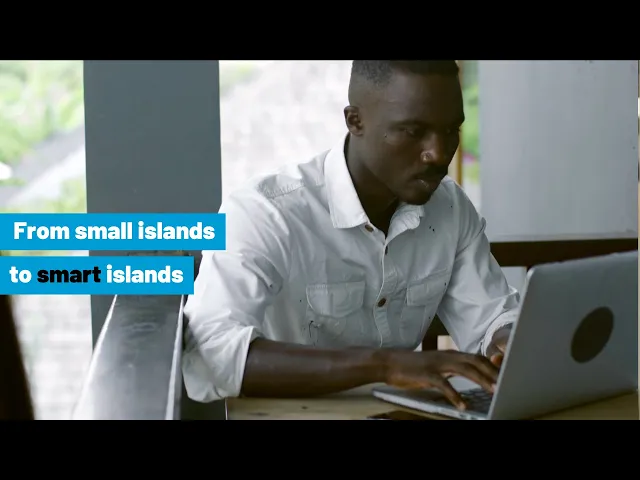
On the remote Tongan island of Hunga, getting online once meant standing near a school fence and hoping a weak 3G signal would hold.
Residents were technically connected, but the service was often too slow for video calls, online banking, or many of the digital tools that have become routine elsewhere. As Tonga communications official Stan Ahio put it: “You’re connected, but somehow you’re still unconnected.”
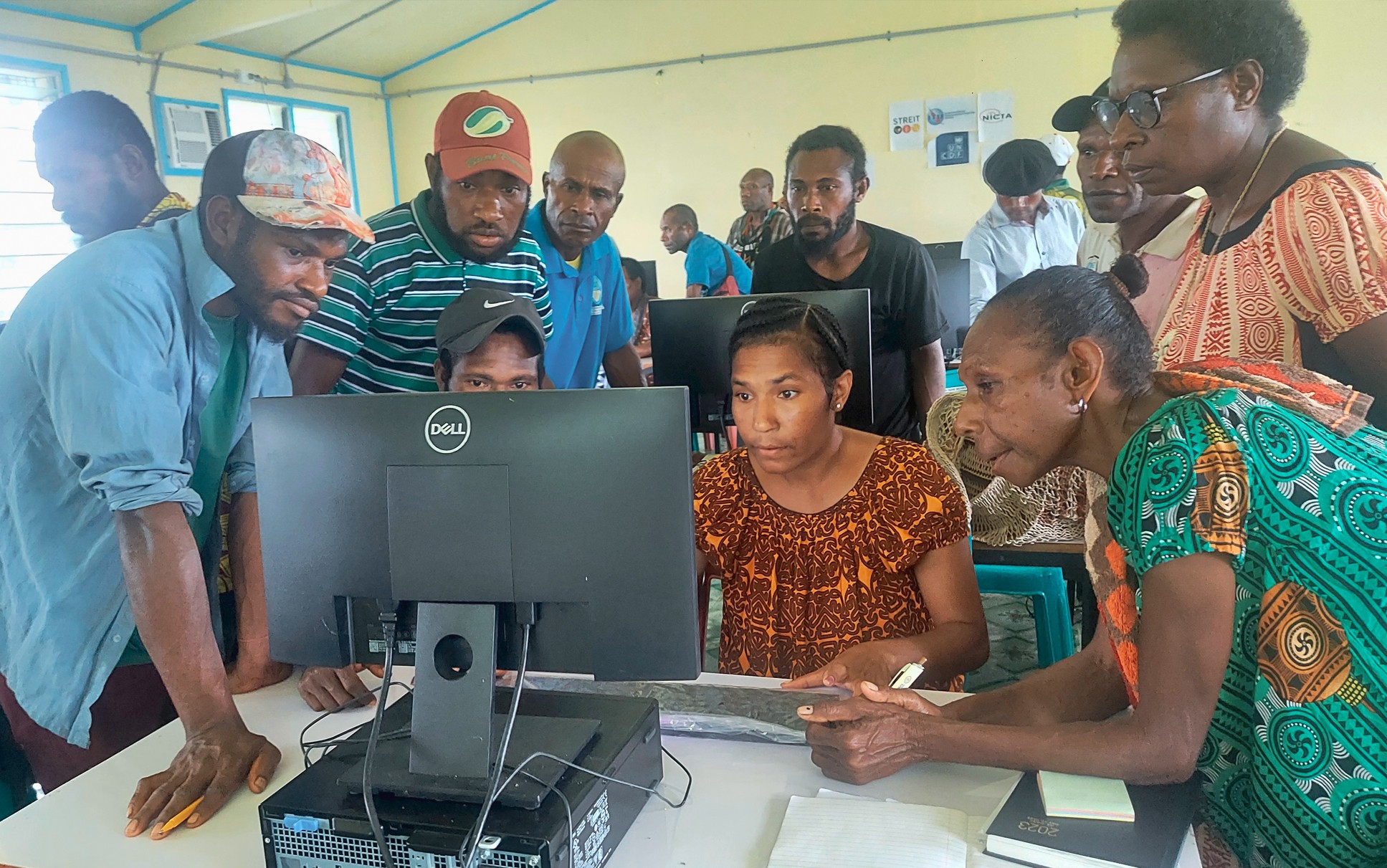
Today, a digital hub inside the island’s primary school provides high-speed broadband, computers, teleconferencing, and access to online services. Students can continue their education when rough seas make the boat journey to another island impossible. Families can receive money electronically rather than traveling hours by boat. Local producers can find customers online before transporting their goods to market.
Hunga is one example of a much larger experiment unfolding across Asia and the Pacific.
The International Telecommunication Union’s Smart Villages and Smart Islands (SVSI) initiative is bringing connectivity and digital services to rural and island communities where distance has historically limited access to healthcare, education, finance, government services, and economic opportunity.
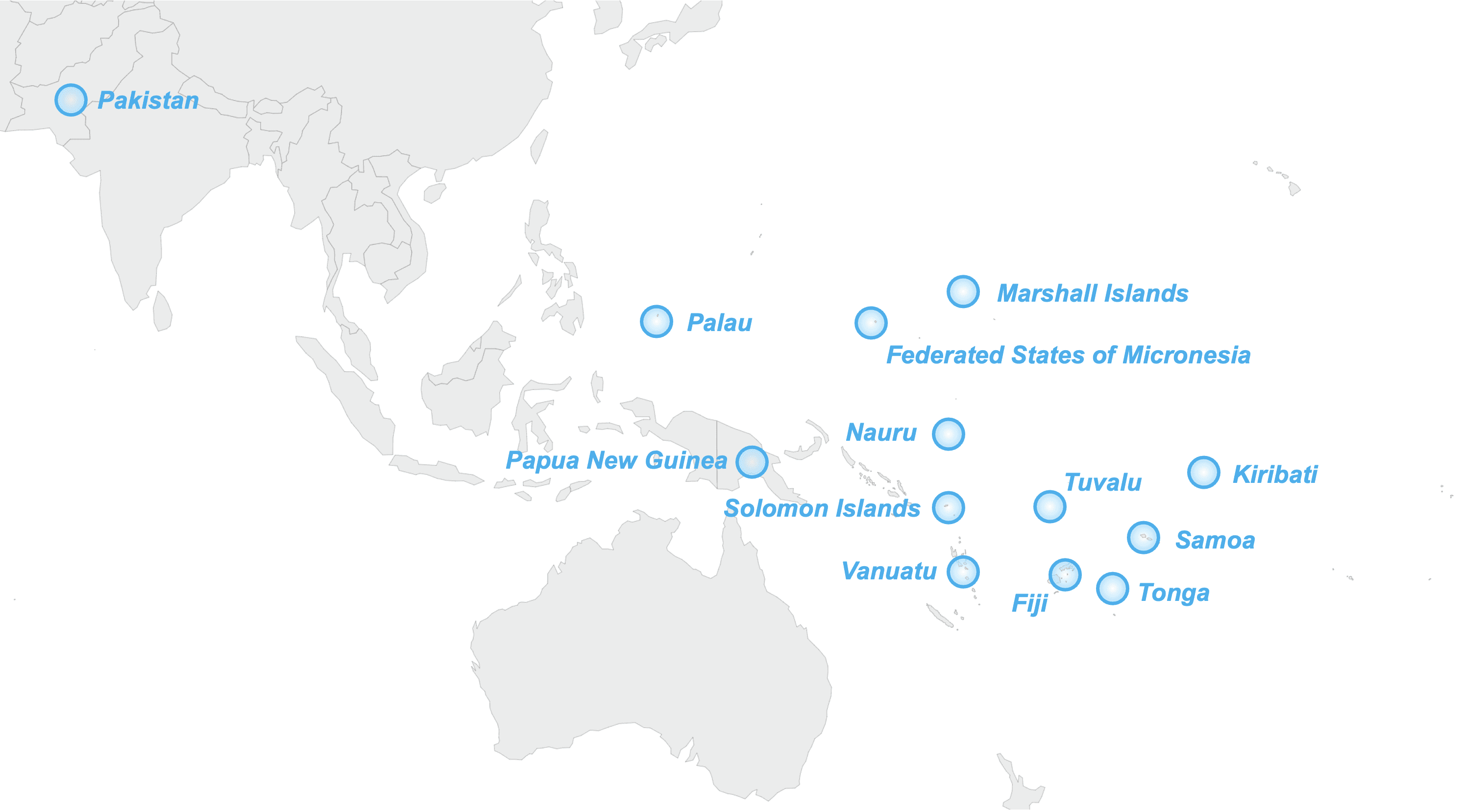
After early pilots in Pakistan and Vanuatu, the initiative has expanded across the Pacific, including communities in Fiji, Kiribati, the Marshall Islands, Micronesia, Nauru, Palau, Papua New Guinea, Samoa and Tonga. A new ITU-backed regional project, running through November 2027 with support from the Australian government, is now focused on turning successful pilots into sustainable national programs.
The goal is not simply to install internet connections. It is to ask a bigger question: what becomes possible when geography no longer determines access?
From Connectivity to Capability
Pakistan offers an early answer. The country’s first ITU Smart Village opened in Gokina, a mountainous community near Islamabad, in 2023. The model subsequently expanded to Sambrial and Swabi, combining connectivity with telemedicine, online education, digital skills, entrepreneurship training, and other services designed around local needs.
By 2025, Gokina’s small telemedicine clinic had delivered more than 5,000 online consultations. More than 100 girls were taking science courses previously unavailable to them, while more than 250 women had participated in digital-skills and entrepreneurship training. For residents, the impact is measured less in bandwidth than in access.
“This clinic has changed our lives,” one Gokina resident told the ITU. “We no longer feel isolated or without hope when someone is ill.”
That distinction lies at the heart of the Smart Village concept. Broadband is the foundation, not the finished product. The model combines affordable connectivity with digital skills and locally relevant services, allowing the same technological infrastructure to support healthcare, education, agriculture, finance, commerce, government and disaster preparedness.
Pakistan’s original Smart Village project concluded in 2025, but the experiment is moving into a new phase. In July 2026, ITU began a new two-year initiative specifically focused on scaling up Smart Villages across Pakistan—a transition from proving the concept in individual communities to considering how it could become part of broader national digital development.
For World Technology, that evolution demonstrates something fundamental about innovation: technology matters most when it expands human capability.
Where the Four WT Realms Connect
Smart Villages and Smart Islands are inherently a Data Science story. Connected communities generate, receive and act upon information differently. Digital financial services can connect households to the formal economy. Online platforms can link farmers and entrepreneurs with markets. Data from weather systems can feed early-warning networks, turning information into potentially life-saving decisions.
But connectivity quickly reaches beyond data.
In Life Science, telemedicine can bring physicians into communities where specialist care may be hours away, while connected education strengthens access to health knowledge and training. Digital agriculture can also support food security by helping farmers identify crop diseases, manage pests and improve productivity.
For communities facing rising seas, tropical cyclones and other environmental pressures, Earth Science becomes equally important. Meteorological observations, environmental monitoring and hazard data become more valuable when they can reach vulnerable populations quickly. On an island, a digital network is not merely communications infrastructure—it can become part of the community’s climate resilience.
Then comes Industrial Science: the physical systems that make all of it possible. Broadband networks, satellites, fibre-optic connections, power systems, sensors, computers and resilient communications infrastructure translate scientific capability into something people can actually use.
The four realms do not operate independently here. They converge in a classroom connected to a teacher hundreds of miles away, a farmer receiving information about crops, a patient speaking with a doctor through a screen, or an island receiving an early warning before a storm arrives. That convergence is where technology becomes transformative.
A Smarter Definition of Progress
For decades, technological progress has often been imagined through the lens of major cities: smarter transportation, connected buildings, automated infrastructure and increasingly intelligent urban systems. Smart Villages and Smart Islands challenge that assumption.
The future of technology cannot be measured only by what becomes possible in the world’s most connected places. It must also be measured by how effectively innovation reaches those who have historically been the hardest to reach.
That makes the Asia-Pacific initiative significant far beyond the individual communities involved. If these programs can become financially sustainable, locally owned and scalable, they could offer a blueprint for digital development in remote communities around the world.
The greatest achievement would not be turning every village into a miniature smart city. It would be giving communities the tools to solve their own challenges while preserving the qualities that make them distinct.
That is human ingenuity at its most meaningful: not technology for technology’s sake, but technology designed around people.
An island will remain an island, and a mountain village will remain remote. A broadband connection cannot eliminate geography, but it can make distance matter less.
For millions of people, that could change almost everything.